- Dec 10, 2025
- 5 min read
At Wix, AI isn’t a side project – it’s a company-wide shift in how we build, create, and deliver. We’re redesigning work from the ground up, empowering every profession with tools and workflows that unlock speed, creativity, and a whole new level of impact.
We’re in the midst of one of the most significant transformations we’ve ever undertaken. AI is becoming a core professional skill for every role, reshaping the way we work, collaborate, and build products, while elevating what people can do and how they do it.
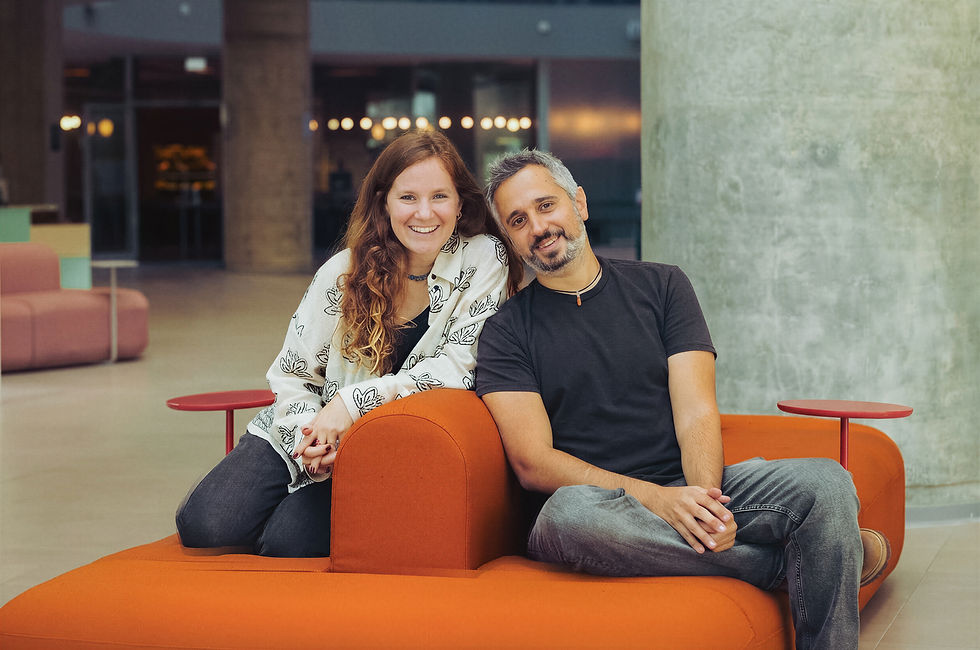
To understand how this change is taking shape, we sat down with the leaders behind the effort: Asaf Yonay, Head of AI Adoption & Frontend, and Gefen Mittelman, Operations Manager of the Frontend and co-leader of our AI program. Together, they’re shaping how AI is adopted across Wix, accelerating organizational velocity, and preparing employees for a truly multi-disciplinary future.
AI as a New Core Skill
For the past year, Asaf and Gefen have been leading an internal AI adoption program aimed at improving the velocity of every profession at Wix. The effort brings together product managers, designers, frontend and backend engineers, writers, and more to build AI-powered “agents” that make day-to-day work faster and more effective.
What excites them most is seeing people embrace AI not as a novelty, but as a new professional competency. It’s not about creating new AI-specific roles; it’s about making AI proficiency a natural part of everyone’s craft. As Asaf puts it, when developers combine their expertise with AI-powered tools like Cursor, they gain meaningful, measurable boosts in efficiency.
Gefen highlights the remarkable enthusiasm, noting that this is the first major organizational movement where she feels there is "a lot of engagement from all the participants and stakeholders". This engagement has spurred a "very creative" environment, leading to ideas and solutions that are "much more creative than what we used to hear before".
Asaf emphasizes two critical outcomes of this movement:
1. Challenging existing routines: AI forces us to rethink processes. Even when it doesn’t provide the final answer, it asks the right questions and pushes teams to create better workflows.
2. Democratization: The task force is focused on building robust infrastructure that allows people the freedom to develop their own workflows and agents, while creating “golden paths” for critical workflows, like product creation.
Driving Change by Tackling the Pain Points

Rolling out AI in a large and diverse organization requires focus. One of the earliest decisions was to “attack the most painful spots” – those moments where people feel they’re losing the most time.
The process started with a comprehensive mapping phase: every profession identified the parts of their workflow that slow them down.
Each group then built an AI agent to address that specific pain point in the smartest, most efficient way. A major accelerator in this process has been our organizational structure:
Guilds as Drivers of Change
Guild managers hold deep expertise and serve as trusted voices in the field. A Frontend developer listens to their Guild as the authority on how to be a better FED, making Guilds natural engines of adoption in a changing world.
Strong Management Support
Clear support from leadership gave the Task Force the mandate, speed, and flexibility needed to move quickly across the organization.
Addressing Resistance and Fear of Replacement

As with any major change, not everyone was immediately comfortable. Asaf explains that resistance usually falls into two types: one type is fear that “AI will replace me”; the second one is confidence in personalized, non-standardized workflows that people are reluctant to change. To address this, we focus on a simple truth: increasing velocity means more capabilities, not fewer people. As we move forward, we see two types of professional paths emerging:
1. The Multi-Disciplinary Generalist: AI unlocks the ability to expand expertise – turning a frontend developer into someone who can also handle backend (“full-stack”), or enabling product managers to dabble more deeply in design. This means less friction, fewer dependencies, and more ownership.
2. The Expert – The Skill Keeper: These are people who remain deeply specialized and operate at the edge of their profession. Even areas often thought to be at risk – like content – are evolving. Writers are becoming expert reviewers who shape and refine AI-generated content.
Gefen notes that despite the initial fears, every profession is still experimenting: “Fear exists, but it doesn’t paralyze anyone. The responsibility remains with us: we operate the tools, we review everything, and errors are still ours to own.”
Education, Empowerment, and the Measurement Challenge
The first step in building trust was education and mindset shift, both broad (“what AI is”) and personal (“how to use these tools in your workflow”). Reducing early failure is key to building confidence and sustained engagement. To support this, we created the AI Masters Forum – a group of ambassadors from every profession who champion new workflows, share success stories, and provide feedback from the field. These individuals participate in an IC role (individual contributor role) that is in addition to their main job. They play a major role in spreading adoption and ensuring we build tools that truly solve problems.
One challenge remains: measurement. Asaf explains: “We don’t yet know how to measure the full value.” While we can estimate savings (e.g., “backend spends 40% on step X; this tool saves 50%, so we recapture 20% of time”), team-wide and org-wide impact is more complex to quantify.
Looking Ahead: Complete Workflows and New Products
Our long-term vision is ambitious: to evolve from building isolated AI tools into building entire AI-driven workflows. AI will appear at every step – from ideation through development, testing, writing, and production.
Breaking down silos is a major part of that vision. As capabilities mix and barriers between professions fade, we unlock a new level of internal velocity. And that velocity directly adds to our market advantage: we gain the ability to deliver more, faster, and explore bigger opportunities than before.
This expertise is already shaping our core product. One direction we’re investing in is an AI layer that generates 80% of a website for the user, allowing them to manage the last 20%.
One example of friction removed is Wixify, our new set of AI powered workflows. It's built to truly understand the Wix ecosystem, integrating with Figma, Storybook, Design System, Translations, BI services and more – right from our development environment. Previously, getting text and translations from writers into production required heavy coordination between writers and developers. Now, with an AI-powered Figma plugin, translations and content IDs move automatically into the code, eliminating a major bottleneck.
Across the company, people are proposing ideas and creating solutions that simply didn’t exist before, from debugging extensions to workflow automation.
Where Transformation Truly Begins
Organizational transformation doesn’t start with technology – it starts with people.
Clarity, education, and mindset lay the foundation. From there, strong infrastructure, a democratic approach to building tools, trust from leadership, and early wins create the momentum that fuels innovation.
When people feel empowered, curiosity expands. They experiment. They challenge routines. They propose bold ideas. And that’s exactly how we’re defining the future of development at Wix.
Want to be part of a place where people and AI push each other forward? Check out our open roles and join us at Wix.

Comments